
Valves Used in High-Temperature Industrial Applications – Types, Material & Design
Valves used in high-temperature industrial applications are really tough to make. When it gets very hot the materials used to make the valves change, the parts that keep the valve start to fail and the valve itself can get warped from the heat. Valves used in hot industrial settings need to be able to withstand the heat not leak and still work properly. This is a deal in industries, like power generation, petrochemical processing, refining, cement production and steel manufacturing. Where it is always very hot.
At Speciality Valve, a valve manufacturer in India, they always think about how their valves will work in hot conditions when they are designing new products for tough jobs. They check to make sure the valves can handle the heat during the planning and engineering stages.
Operating Conditions and Process Challenges
High-temperature service has its set of physical and chemical mechanisms. These mechanisms are different from what happens at room temperature or moderate temperatures. Understanding them is crucial for choosing the valve and predicting where it might fail if the specifications are not good enough.
Common challenges include:
- This is when metal slowly deforms over time under stress at temperatures. It affects valve bodies, bolts and stem parts.
- Scaling on valve body and trim surfaces. This happens a lot in services where the fluid has oxygen or water vapor.
- Thermal fatigue from going between high operating temperatures and room temperature during start-up and shutdown.
- Standard carbon steel loses strength above 425°C. This means you need to use alloy grades with high-temperature properties.
- Graphite packing can. Lose sealing contact when exposed to high temperatures for a long time.
- Different valve components made from materials can expand at different rates. This leads to binding, distortion or loss of seat contact.
When specifying high-temperature valves you can’t just look at their properties at room temperature. You need to evaluate their tensile strength at temperatures, creep rupture strength and oxidation resistance. This evaluation must be based on the operating conditions of the application and the valves performance, at high temperatures.
Types of Valves Used in High-Temperature Industrial Applications
The valve types used in high-temperature service are broadly similar to those used in other demanding applications, but their design details, materials, and construction features differ significantly from standard versions of the same valve type.
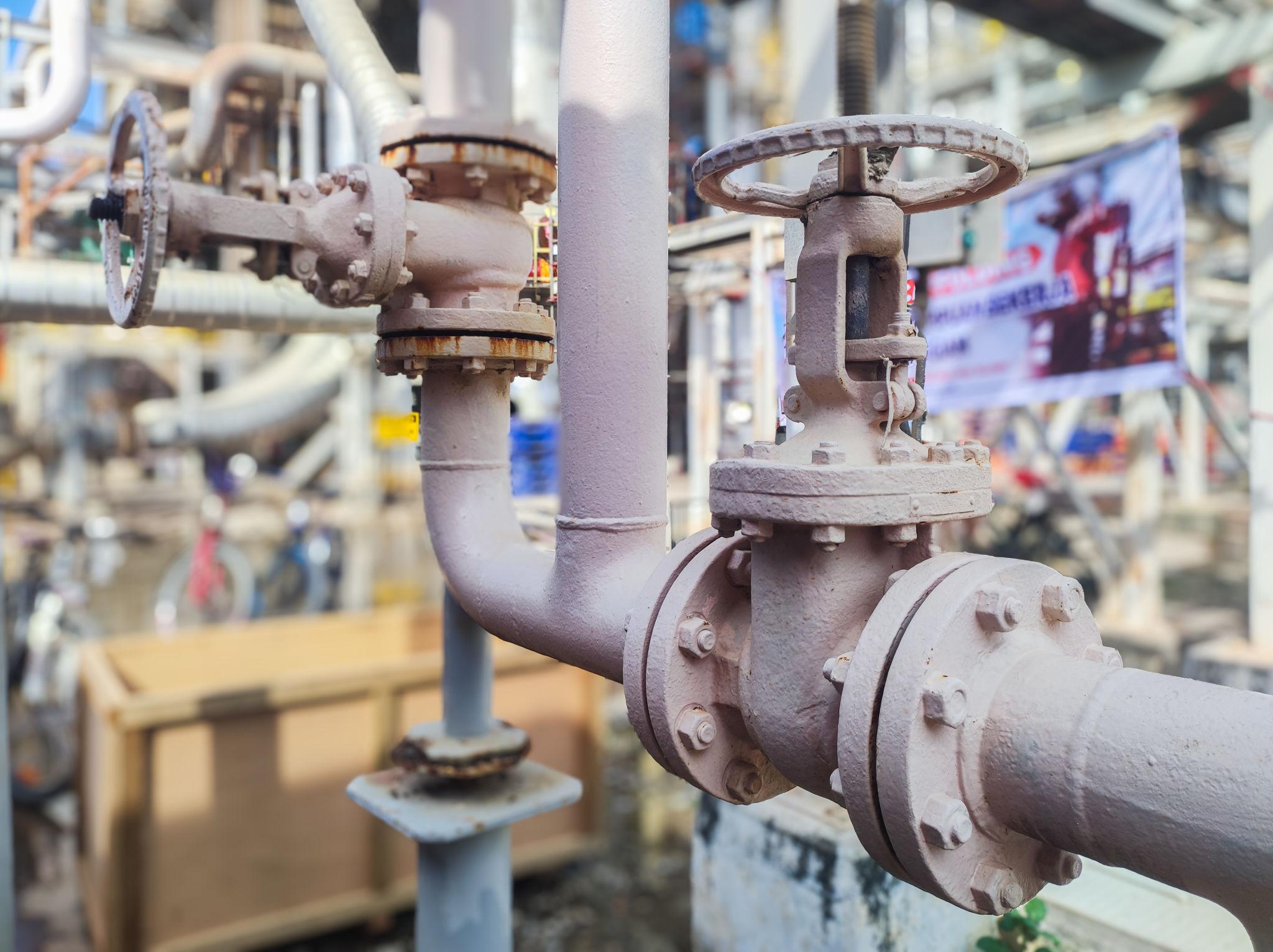
Gate valves are often used for isolation in temperature steam and process lines. They have a full-bore design which helps to reduce pressure drop and turbulence. The wedge or parallel slide disc in these valves allows for a shut-off at high temperatures. At high temperatures other valve designs may have problems due to thermal expansion.
Globe valves help control flow and throttle in hot systems. They are used in steam conditioning and desuperheating to lower the pressure and temperature of high-energy steam. This makes the steam safe for use on. In applications with high pressure drops a special kind of trim with multiple stages is used.
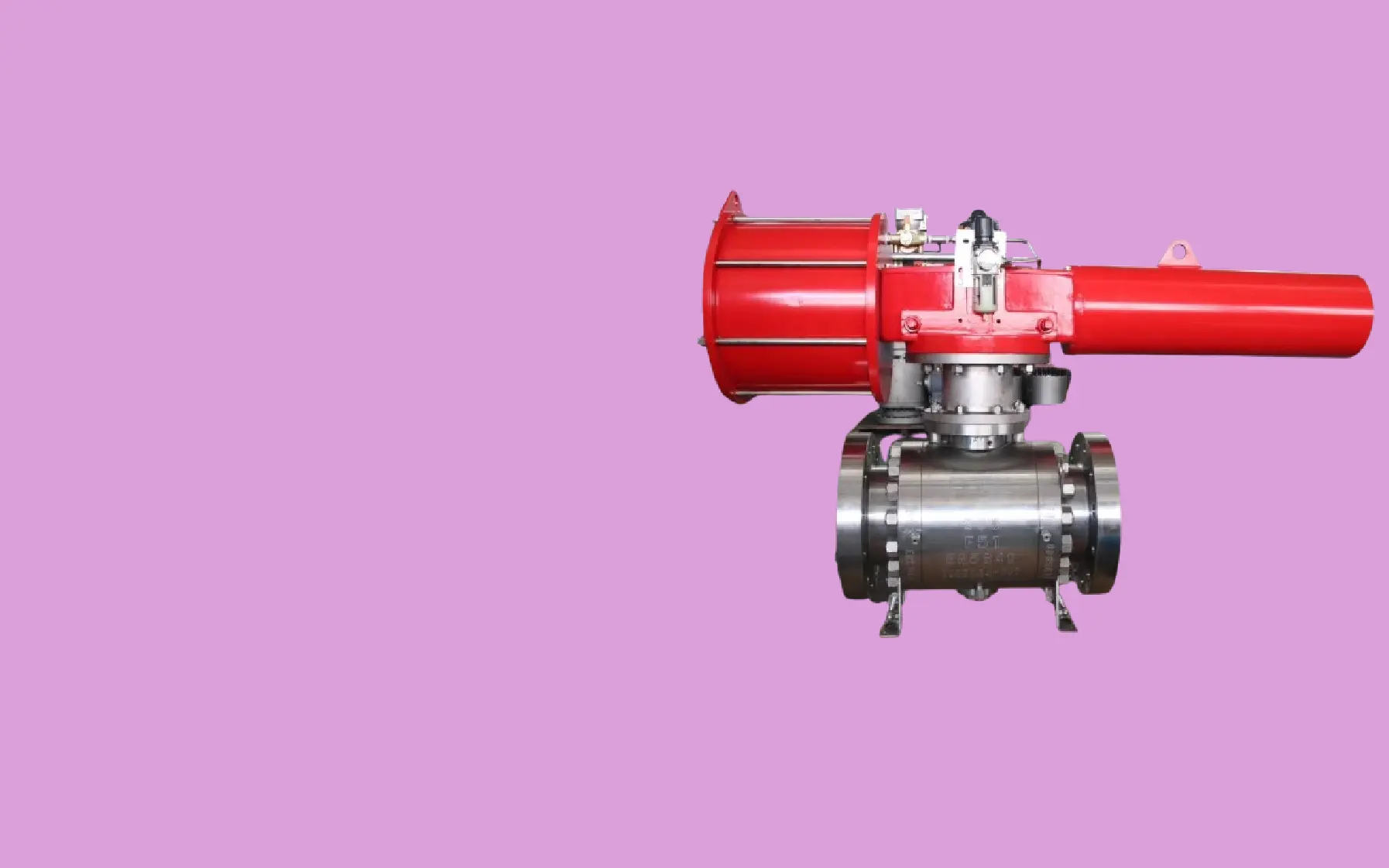
Ball valves are used when we need to isolate something and don’t have a lot of space. This is often the case in high-temperature situations. Metal-seated ball valves are better than seated ones, for really hot applications. They use hard metal seats often made of cobalt alloy or ceramic that keep sealing even when it’s very hot. PTFE and other soft seat materials wouldn’t work well in these conditions.
Butterfly valves are used in high-temperature gas handling applications, particularly in large-diameter ducts and flue gas systems where the low-pressure drop and compact design of the butterfly valve make it practical. Triple eccentric butterfly valves provide metal-to-metal seating that is appropriate for high-temperature service, unlike concentric designs that rely on resilient seat materials incompatible with elevated temperatures.
Check valves in high-temperature service protect pumps, compressors, and heat exchangers from reverse flow. Tilting disc and swing check designs in alloy steel or stainless steel are used in steam and hot process lines. The selection of check valve type and sizing is important in high-temperature service because rapid valve closure under flow reversal can generate pressure transients that impose additional stress on already thermally loaded piping systems.
Safety valves must function reliably at high temperatures, opening fully at the set pressure and reseating cleanly when pressure reduces. Spring selection for high-temperature safety valves accounts for the reduction in spring rate that occurs as temperature increases. In very high-temperature applications, the valve body may be fitted with a finned radiator or extended bonnet to keep the spring assembly at a lower temperature than the valve body, maintaining consistent spring characteristics.
Material and Design Considerations
Commonly used materials include:
- Carbon steel ASTM A216 WCB suitable to approximately 425°C for moderate-pressure applications
- Low alloy steel WC6 (1.25% Cr, 0.5% Mo) suitable to approximately 540°C, widely used in steam service
- Low alloy steel WC9 (2.25% Cr, 1% Mo) suitable to approximately 595°C for higher-temperature steam and process service
- Grade F91 (9% Cr, 1% Mo, V, Nb) the standard material for ultra-high-temperature steam service in modern power generation, suitable to approximately 650°C
- Stainless steel grades 304H and 316H austenitic grades with improved high-temperature strength used in chemical and petrochemical high-temperature service
- Nickel alloys including Inconel 625 and Incoloy 800H for the most severe high-temperature and corrosive service combinations
Design features specific to high-temperature valve construction include:
- Extended bonnets that position the packing gland away from the hottest part of the valve body, reducing packing temperature and extending service life
- Pressure seal bonnet construction for the highest pressure-temperature classes
- Hard-faced seating surfaces in Stellite or equivalent materials to resist high-temperature erosion and maintain shut-off integrity
- High-temperature graphite or flexible graphite packing rather than PTFE or elastomeric packing incompatible with elevated temperatures
- Alloy steel bolting with appropriate elevated temperature properties to maintain joint integrity through thermal cycling
Standards including ASME B16.34, API 600, API 602, EN 12516, and the relevant ASTM elevated temperature material specifications provide the technical framework for valve design and material selection in high-temperature service.
Common Failure Modes and Maintenance Practices
Valve failures in high-temperature service typically develop over time rather than occurring suddenly. Typical failure modes include:
- Packing leakage caused by graphite consolidation and loss of gland load over time, particularly following repeated thermal cycling
- Seat leakage resulting from oxidation or erosion of hard-faced seating surfaces, reducing their sealing effectiveness
- Creep deformation of valve body or bonnet components in service at the upper end of the material’s rated temperature range, leading to dimensional changes that affect assembly integrity
- Thermal fatigue cracking at geometric stress concentrations such as body-to-bonnet transitions and nozzle attachments, particularly in valves subject to frequent temperature cycling
- Bolting relaxation under sustained high temperature, reducing the clamping force on body joints and increasing the risk of leakage
Maintenance practices for high-temperature valves typically include periodic re-torquing of gland packing and body bolting while the valve is at operating temperature, scheduled seat inspection and lapping during planned shutdowns, and visual examination for signs of external oxidation or distortion that might indicate internal temperature exceedance.
We need to make sure that we choose the materials and that we take good care of the high temperature valve. If we do all these things then the high temperature valve will work well. The plant will be available when we need it. The high temperature valve will also be able to do its job of controlling and protecting the plant. So when we choose a temperature valve we need to think very carefully about what we are doing. We need to make sure that we are choosing the valve for the job.