
Simplex vs Duplex Basket Strainer: Working, Differences and Selection Guide
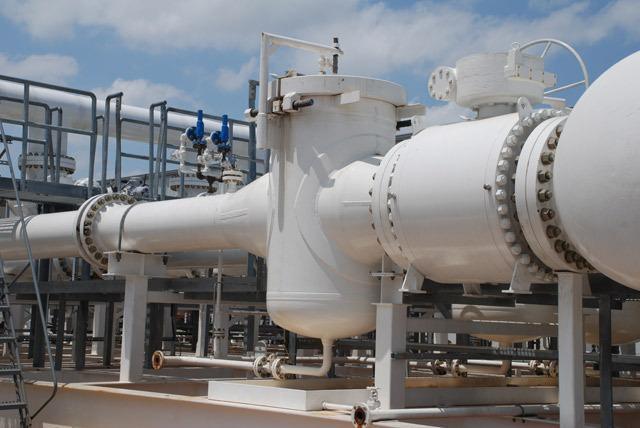
Basket strainers guard pumps, valves, and process equipment by capturing solid particles before they reach sensitive downstream components. One first decides between a simplex and a duplex layout when specifying a basket strainer for a pipeline, not brand or pricing. That decision influences the process’s ability to continue operating throughout basket cleaning, the installation’s required space, and the scope of continuous maintenance work.
Designed for oil and gas, chemical processing, water treatment, power generation, maritime, and pulp and paper uses, Speciality Valve offers simplex and duplex basket strainers in a range of body materials, pressure classes, and end connections. This guide explains how every design operates, where they vary, and how to select the best one for a given system.
What a Basket Strainer Does ?
A basket strainer is a sealed pressure vessel with a detachable, washable screen filtering out solid particles from the process fluid. It is put in the pipeline horizontally, with a bolted or quick opening cover giving access to the basket for cleaning. A basket strainer catches trash before it goes downstream to stop protecting pumps from wear out, clogging and mechanical damage, clogging, and mechanical damage.
How a Simplex Basket Strainer Works ?
A simplex basket strainer uses a single chamber housing one basket. Fluid enters the body, passes through the perforated or mesh screen, and leaves clean on the downstream side while solids collect inside the basket.
- A bolted or quick opening cover houses the basket and provides access for removal.
- Solids build up gradually inside the basket as the strainer stays in service, until cleaning is due.
- Cleaning entails segregating the line, reducing pressure by way of a vent, emptying the chamber, and removing the basket for cleaning.
- Keeping a second basket ready and switching in during cleaning can help to lower downtime, therefore enabling the contaminated basket to be cleaned independently.
Because the process has to pause while the basket is out, simplex strainers suit batch operations, redundant parallel lines, and services where a short interruption for cleaning is acceptable.
How a Duplex Basket Strainer Works ?
A duplex basket strainer consists of two simplex chambers linked by a three-way diverter or changeover valve. The operation goes on without breaks because one chamber is isolated for basket removal and cleaning and another remains in use.
- The changeover valve or diverter directs flow to whichever chamber is in service.
- The offline chamber is serviced by isolating that side, draining it, and removing the basket for cleaning, all while flow continues through the active chamber.
- Once the basket is cleaned and the chamber resealed, it becomes the standby side and ready to take over on the next changeover.
This design suits continuous process lines where stopping flow is not an option, since filtration keeps running throughout basket cleaning and maintenance.
Simplex vs Duplex Comparison
| Parameter | Simplex Basket Strainer | Duplex Basket Strainer |
| Chamber Count | One | Two, with a changeover valve |
| Flow During Cleaning | Interrupted | Continuous |
| Footprint | Compact | Larger, needs room for both chambers |
| Initial Cost | Lower | Higher |
| Maintenance Complexity | Simple, single basket | Requires changeover valve operation |
| Best Fit | Batch processes, redundant lines | Continuous processes, critical service |
Materials and Construction
Both arrangements are offered across a comparable range of body materials, screens, and trim, which enables the strainer to be tuned to the process fluid instead of hampered by a small material inventory.
- Body: carbon steel, CF8, CF8M, CF3M, cast iron, SS304, and SS316.
- Screen or basket: SS304, SS304L, SS316, and SS316L, in perforated or mesh construction.
- Gasket: graphite combined with a stainless steel core for a durable seal.
- Cover: A105, F304, F304L, F316, and F316L.
- Cover bolting: A193 B7, A193 B8, and A193 B8M, with grade 2H cover nuts.
Size and Pressure Range
- Simplex basket strainers: DN25 to DN400, in Class150 to Class300.
- Duplex basket strainers: DN25 to DN200, in Class125 to Class300 and PN10 to PN40.
Applicable Standards
- Design and manufacture to ASME B16.34.
- Flanged end dimensions to ASME B16.25, ANSI B16.1, BS EN 1092-2, and DIN 2501, depending on the connection type.
- Screwed end dimensions to ANSI B1.20.1 and BS 21 where a threaded connection is used.
- Face to face dimensions to ASME B16.25, ANSI B16.10, DIN 3202, EN 558 1, and EN 12982.
- Inspection and testing carried out to API 598.
Where Simplex and Duplex Strainers Are Used
Both varieties serve the same main sectors; the decision between them usually depends on whether the line could withstand a disruption in flow.
- Oil and gas production: removing solids from crude, produced water, and process lines.
- Chemical processing: protecting pumps and instrumentation from particulate in aggressive fluids.
- Water and wastewater treatment: filtering intake water and process streams ahead of sensitive equipment.
- Power generation: guarding cooling water and auxiliary systems from debris.
- Pulp and paper: protecting refiners, pumps, and spray systems from fiber and debris.
- Marine: filtering seawater intake and onboard process lines.
How to Choose Between Simplex and Duplex
- Can the process tolerate a brief shutdown for basket cleaning? If the answer is no, a duplex strainer is the safer specification.
- How much space is available on the skid or pipe rack? Duplex units need extra room for the second chamber and the changeover valve.
- What is the expected solids loading and cleaning frequency? Heavy solids loading favors duplex, since baskets need cleaning more often and a simplex unit would interrupt flow repeatedly.
- What does the budget need to prioritize, initial cost or operational continuity? Simplex strainers cost less upfront; duplex strainers cost more but protect process continuity.
- Is redundancy already built into the piping through parallel lines? If parallel simplex strainers with isolation valves are already part of the layout, a single duplex unit may not be necessary.
Although both designs perform the same filtration function, they suit different operating requirements, simplex and duplex basket strainers perform the same job of shielding downstream equipment from solid particles. For batch lines and processes when a brief shutdown for cleaning is permissible, a simplex strainer is the easier, less expensive choice. Though it costs more and takes up more room, a duplex strainer is the best choice for continuous, important operation as it maintains filtration operation via basket cleaning.
Speciality Valve offers simplex and duplex basket strainers in the body materials, sizes, pressure classes, and standards utilized in the oil and gas, chemical, water treatment, power, marine, and pulp and paper industries so the strainer can be matched to the real demands of the line.