
Your Cart
Add ₹300.00 to cart and get free shipping!
No products in the cart.
Free Shipping on All Orders Over $750
Add ₹300.00 to cart and get free shipping!
No products in the cart.
Free Shipping on All Orders Over $750
Rising Stem vs Non-Rising Stem Gate Valves: Which is Better?
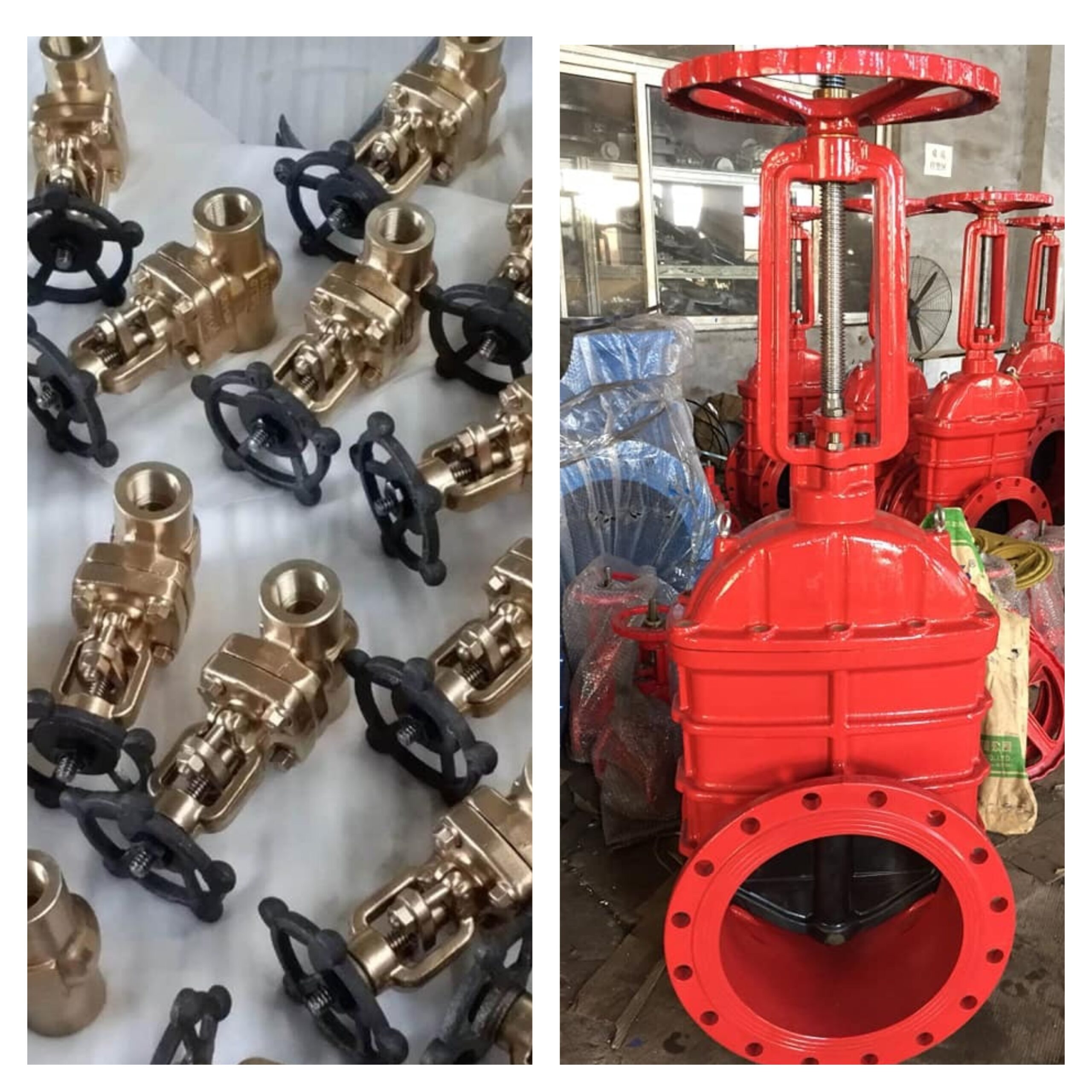
Selecting the appropriate gate valve is crucial for controlling flow and isolating pipeline sections in industrial systems. Rising Stem Gate Valves and Non-Rising Stem Gate Valves are commonly used options, each featuring distinct stem designs, operational mechanisms, and installation requirements. While both types serve the primary function of regulating flow, differences in stem movement, space requirements, and maintenance needs determine their suitability for specific applications.
Speciality Valve, a leading Rising Stem and Non-Rising Stem Gate Valve manufacturer in India, provides insights into the technical distinctions and performance characteristics of each valve type, helping industries make informed choices for optimal system operation. Understanding these differences ensures that the selected valve delivers efficiency, reliability, and long-term service in its intended application.
Why Rising Stem and Non-Rising Stem Valves Are Compared
These two types of gate valves are compared because they both provide full shutoff, but differ in:
- Visual position indication – rising stem valves show whether the valve is open or closed.
- Space requirements – non-rising stem valves are compact and ideal for restricted areas.
- Ease of maintenance – exposed stems allow easier inspection and lubrication.
- Operational torque – internal vs external threading affects handwheel force requirements.
The choice often depends on pipeline pressure, temperature, vertical space, and maintenance access.
Design and Operation Differences
Rising Stem Gate Valve
A rising stem valve has an external stem that moves upward as the gate opens, providing a clear visual indicator of the valve’s position. The handwheel rises along with the stem, and threads are exposed for inspection and lubrication.
Key Design Traits:
- External stem movement for visual open/closed indication
- Handwheel rotates and rises with stem
- Suitable for high-pressure and high-temperature systems
- Easy stem inspection and lubrication
Non-Rising Stem Gate Valve
Non-rising stem valves feature an internal stem. The stem does not protrude above the valve body, and the handwheel rotates to move the gate internally. This design is compact and ideal where vertical space is limited.
Key Design Traits:
- Compact, space-saving body
- Stem remains inside the valve body
- Suitable for underground or confined pipelines
- Maintenance access is limited compared to rising stem valves
Comparison Table: Rising Stem vs Non-Rising Stem Gate Valve
| Parameter | Rising Stem Gate Valve | Non-Rising Stem Gate Valve |
| Stem Movement | External, rises when opening | Internal, does not rise |
| Visual Open/Closed Indicator | Yes | No |
| Installation Space | Requires vertical clearance | Compact, suitable for tight spaces |
| Maintenance Accessibility | Easy to inspect and lubricate | Moderate to difficult |
| Common Applications | High-pressure oil, steam lines | Confined water or industrial lines |
Flow Characteristics and Performance
Flow Path and Pressure Drop
Both valve types offer straight-through flow, minimizing pressure drop:
- Rising Stem Valves: Smooth flow path with minimal turbulence; easier detection of misalignment or wear.
- Non-Rising Stem Valves: Comparable flow efficiency but internal stem limits inspection visibility.
Cv Coefficient and Operating Torque
- Rising stem valves generally require lower torque due to external threading.
- Non-rising stem valves may require higher torque in larger sizes because the internal stem bears the load directly.
Water Hammer and Orientation Effects
- Rising stem valves respond gradually; slower closing may cause minor reverse flow in high-velocity systems.
- Non-rising stem valves are compact and better for vertical installations, but spring-assisted or automated designs are recommended in high-speed flow lines to minimize pressure surges.
Applications and Suitability
| Valve Type | Applications / Suitability |
| Rising Stem Valves | High-pressure oil and gas pipelines |
| Steam and hot water systems in power plants | |
| Lines requiring clear open/closed position visibility | |
| Industrial chemical pipelines with frequent operation | |
| Non-Rising Stem Valves | Underground or confined pipelines in water treatment plants |
| Moderate-pressure industrial process lines | |
| Applications with restricted vertical space | |
| Systems where maintenance is infrequent and replacement is easier than inspection |
Correct valve selection ensures operational efficiency, minimizes the risk of mechanical failure, and aligns with system safety standards.
Material and Temperature Considerations
Valve material impacts performance under extreme conditions:
- Carbon Steel: Suitable for moderate pressures and temperatures, commonly used in water and wastewater systems.
- Alloy Steel: Handles higher pressures and temperatures; ideal for steam and chemical applications.
- Stainless Steel: Provides corrosion resistance for chemical pipelines or aggressive water treatment systems.
Rising stem valves are preferred for extreme temperature and pressure scenarios because the exposed stem allows easier inspection and lubrication. Non-rising stem valves are effective in moderate conditions where compact installation is a priority.
Technical Specifications
| Parameter | Rising Stem Gate Valve | Non-Rising Stem Gate Valve |
| Size Range | DN15–DN600 | DN50–DN900 |
| Pressure Ratings | ANSI Class 150–2500 | ANSI Class 150–1500 |
| Material Grades | Carbon Steel, Alloy Steel, Stainless Steel | Carbon Steel, Alloy Steel, Stainless Steel |
| End Connections | Flanged, Threaded, Welded | Flanged, Threaded, Welded |
| Max Operating Temperature | 600–800°C depending on material | 500–700°C depending on material |
| Common Applications | Oil & gas, steam, high-pressure systems | Water, confined space pipelines |
Standards and Compliance
Both valve types must meet international standards to ensure safe operation:
- API 600 & 602: Define high-pressure steel gate valve requirements, including tensile strength and impact testing.
- ASME B16.34: Covers flanged, threaded, and welded-end valves, specifying material, pressure rating, and testing procedures.
- Rising stem valves are generally suitable for higher pressure classes due to their robust exposed stem structure.
- Non-rising stem valves require radiographic inspection and chemical composition verification for structural integrity, especially in critical pipelines.
Compliance guarantees safe, efficient operation in oil, gas, chemical, water, and industrial pipelines.
Conclusion
Rising stem and non-rising stem gate valves each have specific advantages based on pressure, temperature, and space requirements. Rising stem valves offer visual position indication, lower operating torque, and easier maintenance, making them suitable for high-pressure, high-temperature systems. Non-rising stem valves provide compact design for confined or underground pipelines, performing effectively in moderate pressure and temperature conditions.
With insights, engineers can select the valve type, material, and stem design that aligns with operational needs, ensuring efficient, safe, and long-term performance. As a trusted Rising Stem and Non-Rising Stem Gate Valve manufacturer in India, Speciality Valve supports technical decision-making for industrial pipelines.