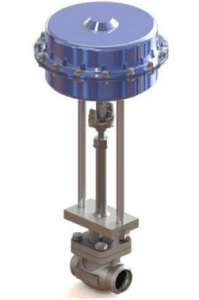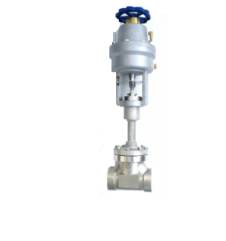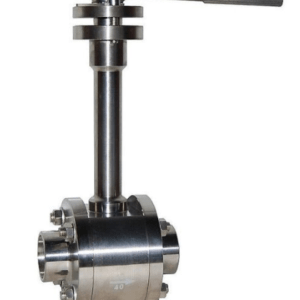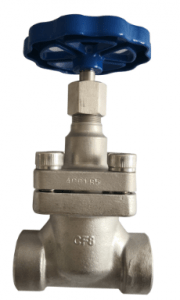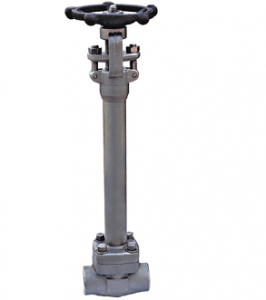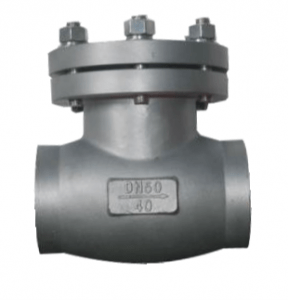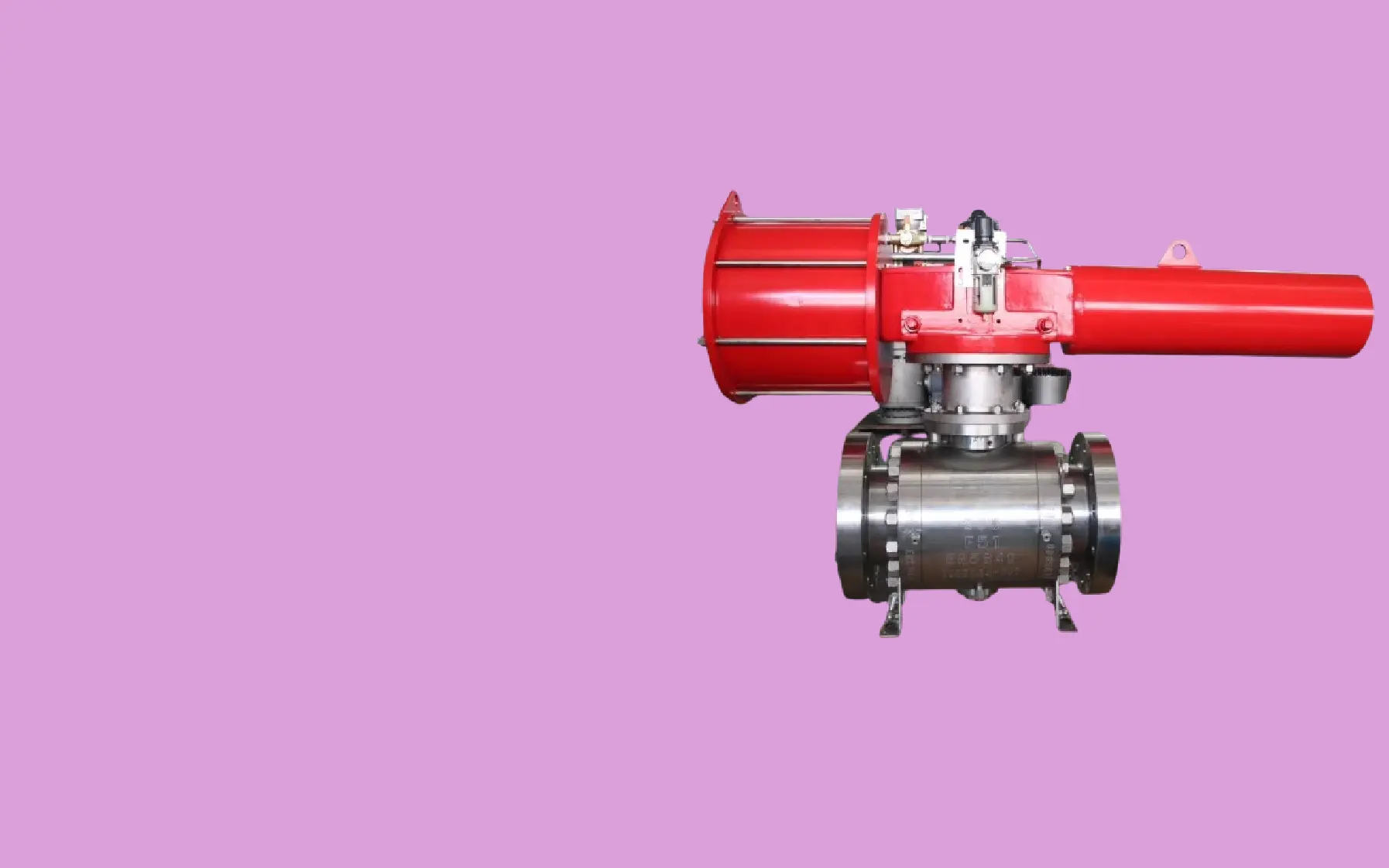

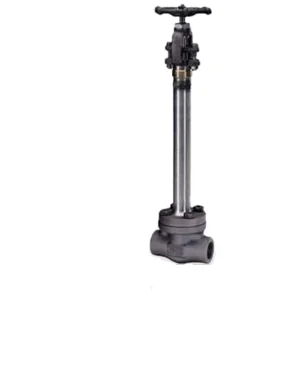
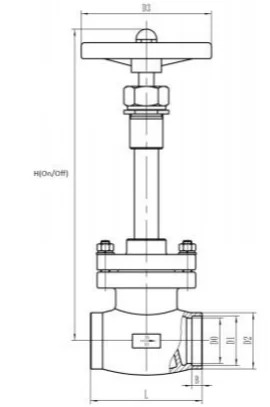
A cryogenic long stem globe valve is designed for isolation and flow regulation of low-temperature fluids, using an extended stem and bonnet to keep the sealing and operating components away from the cold process zone. Speciality Valve manufactures cryogenic long stem globe valve configurations for liquefied gases and other compatible cryogenic services, with materials, trim, seating and connections selected for the operating conditions. Extended stem: Positions the stem sealing area away from the coldest section of the valve. Extended bonnet: Provides the required separation between the cryogenic process zone and packing arrangement. Packing location: Helps maintain the stem-sealing components within a more suitable temperature range. Stem guidance: Maintains controlled linear movement of the closure element during operation. Disc movement: Provides progressive movement toward or away from the seating surface for throttling or isolation. Thermal transition: The extended arrangement reduces direct heat transfer between the cold body and upper valve components. Stem protection: Limits direct exposure of the operating mechanism to the cryogenic process conditions. Isolation duty: The disc moves onto the seat to stop flow through the valve. Throttling duty: Intermediate disc positions can regulate flow where the valve is suitable for control service. Flow direction: The valve arrangement and installation direction should follow the manufacturer's specified flow path. Seat loading: Closure force must provide the required sealing performance at the design conditions. Thermal contraction: Disc, seat and body dimensions can change during cooldown and require appropriate design allowances. Pressure-temperature relationship: The allowable pressure changes with temperature and must be established from the applicable rating requirements. Thermal cycling: Repeated cooldown and warm-up cycles should be considered when evaluating sealing and component performance. LNG transfer lines: Isolation and controlled flow in liquefied natural gas handling systems. Air separation units: Service involving liquefied oxygen, nitrogen and argon where the valve is suitably specified. Cryogenic storage: Isolation of storage vessels and connected low-temperature piping. Industrial gas plants: Low-temperature liquid-gas transfer and distribution systems. LNG fuel systems: Cryogenic fuel handling, bunkering and transfer applications. Oxygen service requires specific consideration of material compatibility, cleaning, ignition risk and contamination control. BS 6364: Cryogenic valve design, construction and testing requirements. ASME B16.34: Applicable pressure-temperature ratings and valve construction requirements. ASME B16.5: Flange dimensions for applicable flanged configurations. ASME B16.25: Butt-weld end dimensions where applicable. ASME B16.11: Socket-weld and threaded-end dimensions where applicable. ISO 5208: Pressure and leakage testing of metallic valves where specified. API 598: Inspection and pressure testing where applicable to the valve specification. Cryogenic testing: Low-temperature functional and leakage testing where required by the project specification. For a cryogenic long stem globe valve, share the fluid, minimum design temperature, operating pressure, line size, pressure class and end connection with Speciality Valve to discuss the appropriate construction, materials and configuration and obtain a quotation.Cryogenic Long Stem Globe Valve Manufacturer in India
Cryogenic Long Stem Globe Valve Technical Data:
Extended Stem and Bonnet Design:
Cryogenic Valve Material Selection:
Cryogenic Valve Material Grades:
Cryogenic Flow and Closure Characteristics:
Cryogenic Long Stem Globe Valve Applications:
Connection and Installation Requirements:
Cryogenic Standards and Testing:

Cryogenic Long Stem Globe Valve
Cryogenic Long Stem Globe Valve from Speciality Valve.
Categories: Cryogenic Valve
Ready When You Are
Need the right valve for your process?
We respond within 24 hours.