
Your Cart
Add ₹300.00 to cart and get free shipping!
No products in the cart.
Free Shipping on All Orders Over $750
Add ₹300.00 to cart and get free shipping!
No products in the cart.
Free Shipping on All Orders Over $750
Valves Used in Thermal Power Plants
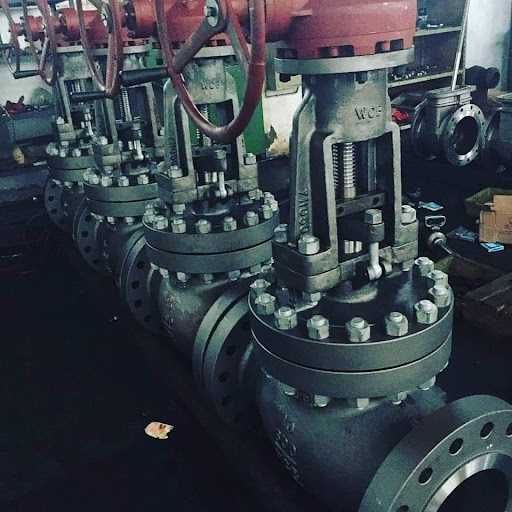
Under some of the most demanding industrial conditions, thermal power plants run with rather high temperatures, high pressures, continual cycling, and strict safety criteria. These systems focus on valves and mechanical parts that are meant to control, separate, direct, and shield the movement of fluid throughout the plant. Valves used in thermal power plants are essential to guarantee operational stability and efficiency from steam turbines and condensate recovery to fuel management and boiler feedwater systems. Engineers, operators, and procurement teams handling worldwide supply chains, especially those purchasing from a Valve Manufacturer in India for foreign power projects, as highlighted across technical resources on Speciality Valve, must first understand valve choice, criteria, and performance needs.
This article provides a detailed, technical overview of valves used in thermal power plants, their working principles, common types, operating conditions, and material considerations presented in a factual, neutral, and engineering-focused manner.
Overview of Thermal Power Plant Systems and Valve Functions
Thermal power plants convert heat energy into electrical energy by means of a collection of linked systems. Valves are used all across these systems to control flow, segregate equipment for maintenance, handle pressure, and ensure safety under challenging working conditions.
Important plant regions where valves are regularly used include:
- Boiler and feedwater circuits
- Superheated and reheated steam lines
- Turbine inlet and extraction systems
- Condensate and cooling water networks
- Fuel oil, gas, and auxiliary utility systems
Every system calls for valves with particular pressure ranges, temperature tolerances, material compatibility, and actuation techniques.
How Valves Work in Thermal Power Applications
Thermal power plant valves work by physically blocking, letting, or changing the flow of fluids like water, steam, oil, or gas. The valve type will determine if linear motion (gate, globe, diaphragm) or rotary motion (ball, butterfly, plug) accomplishes this.
Valves in high-energy steam systems have to:
- Maintain tight shutoff under thermal expansion
- Dependably work through regular startup and shutdown cycles
- Fight erosion brought on by particles and high-velocity steam
- Keep sealing integrity under changing pressure loads.
Depending on system criticality and automation needs, actuation can be hydraulic, electrical, pneumatic, or manual.
Common Types of Valves Used in Thermal Power Plants
| Valve Type | Function | Typical Applications | Key Technical Details |
| Gate Valves | On/off isolation | Feedwater, main steam, condensate lines | • Low pressure drop when open • ANSI 150–2500 • Up to 565°C • 2”–48” |
| Globe Valves | Flow control | Boiler feedwater, bypass systems | • Accurate throttling • Higher pressure drop • Suitable for frequent operation |
| Ball Valves | Quick shutoff | Fuel oil, instrument air, auxiliaries | • Quarter-turn operation • Tight sealing • Moderate temperature service |
| Butterfly Valves | Isolation / throttling | Cooling water intake and discharge | • Compact and lightweight • Cost-effective for large sizes • Low–medium pressure |
| Check Valves | Prevent backflow | Pump discharge, turbine protection | • Automatic operation • Swing, lift, and dual-plate types |
| Safety & Relief Valves | Overpressure protection | Boilers, steam drums | • ASME Section I / VIII • Precise set pressure |
| Control Valves | Modulating control | Feedwater, spray water, turbine bypass | • Actuated operation • Designed for high ΔP |
To effectively control hot, high-pressure fluids across vital systems, thermal power plants depend on a broad spectrum of valve kinds. The valve you choose for isolation, control, or protection will depend on how well it holds up to heat cycling and regular use. Selecting the appropriate valves ensures long-term operational efficiency, system stability, and equipment protection.
Typical Operating Conditions in Thermal Power Plants
To effectively control high-pressure, high-temperature fluids across vital systems, thermal power plants use a broad spectrum of valve kinds. The ideal valve for insulation, control, or protection relies on how consistently it can perform under heat cycling and continuous use. Choosing the right valves guarantees system stability, equipment protection, and long-term functioning efficiency.
| System Area | Pressure Range | Temperature Range |
| Boiler Feedwater | 150–300 bar | 180–250°C |
| Superheated Steam | 160–250 bar | 540–600°C |
| Reheat Steam | 40–60 bar | 540–565°C |
| Condensate System | 5–15 bar | 40–120°C |
| Cooling Water | 2–10 bar | Ambient to 45°C |
Valve material choice, sealing design, and testing needs all depend significantly on these circumstances.
Materials Commonly Used for Power Plant Valves
Valve materials must be able to withstand erosion, corrosion, thermal cycling, and high pressure stresses. Among common products are:
- Carbon steel (ASTM A216 WCB)
- Low alloy steels (WC6, WC9)
- Chrome-moly steels (F11, F22)
- Stainless steels (CF8, CF8M)
- High-alloy creep-resistant steels (F91, F92)
Improved creep resistance is typically the reason alloy steels are chosen for service in high-temperature and superheated steam environments to guarantee long-term structural integrity.
Standards and Compliance Requirements
Valves in thermal power plants are used in places where safety is very important. If they don’t work right, it could cause big problems with how the plant works and with the rules it has to follow. Valves are made and tested in line with globally accepted criteria to guarantee consistent performance, pressure integrity, and cross-platform compatibility. Adherence also makes long-term maintenance planning and engineering clearance easier.
- ASME B16.34 – Pressure-temperature ratings
- API 600 / API 602 – Gate valve design
- API 598 – Valve inspection and testing
- ASME Section I – Boiler applications
These criteria guarantee dependability, safety, and long-term interchangeability throughout worldwide initiatives.
Inspection, Testing, and Quality Expectations
Valves of power plants usually go through: before installation:
- Hydrostatic shell and seat testing
- Non-destructive testing (RT, UT, PT)
- Dimensional inspection
- Material traceability verification
Many EPC firms purchasing valves from all around including from a Valve Manufacturer in India demand third-party inspection and thorough quality documentation. These checks ensure adherence to relevant standards and project requirements as well as assist find early manufacturing flaws. Regular inspection methods help to lower the chance of in-service failures and extend the lifespan of the equipment.
How to Choose Valves for Thermal Power Plant Applications
Choosing valves for thermal power plants calls for a methodical engineering method given the high pressure, temperature, and constant operational circumstances. Correct choice affects plant maintenance dependability, efficiency, and safety. Before settling on specifications, important technical considerations need to be reviewed.
Key valve selection considerations:
- Pressure and temperature ratings: Must match maximum operating conditions.
- Service function: Isolation, throttling, control, or safety.
- Fluid properties: Particulates, water chemistry, and steam quality..
- Valve type: Gate, ball, butterfly, check, or control; gate; globe; control.
- Material selection: Resilience to heat, corrosion, and creep.
- Standards compliance: Requirements of ASME and API.
- Actuation needs: Operation either by hand or automatically.
In thermal power plant systems, a methodical selection approach guarantees dependable performance and extended life span.
Conclusion
Since thermal power plants directly affect safety, operational continuity, and efficiency, they depend rather heavily on valves. Choosing the right valve type, material, and pressure class is a system-level design choice that is more than just checking if the valve works. Understanding how valves operate throughout the facility enables engineers to guarantee legal compliance and long-term dependability.
Resources such Speciality Valve provide a useful means for experts looking for organized, application-oriented information instead of promotional material to keep up with the development of power generation technology.
Recent Posts
- Valves Used in High-Temperature Industrial Applications – Types, Material & Design
- Valves Used in Petrochemical Industries – Types & Selection Guide
- Valves Used in Mining and Mineral Processing Plants
- Valves Used in Steel Plants and Metal Processing Units
- Fire-Safe Valves in Hydrocarbon Processing Facilities